Waterproofing For New Builds In Hervey Bay: What Needs To Be Done Before Handover
Building a new home involves an enormous number of moving parts: trades coordinating across overlapping schedules, materials arriving in sequence, inspections happening at different stages and decisions being made constantly. Waterproofing before handover is one part of that process that rewards careful planning and the right expertise.
New build waterproofing isn't simply a layer applied under tiles. It's a system that needs to account for substrate conditions, product compatibility, correct detailing at junctions and penetrations and adequate cure time before the next trade steps in. When it's planned carefully and carried out by someone who knows the work, it's a seamless part of the build process. When it's treated as an afterthought, the results tend to show up months later when owners have already settled in.
Getting waterproofing right during the construction stage comes down to understanding what's involved, which areas need to be covered before handover, and why having a specialist involved makes a practical difference to the finished result.
Why Waterproofing Gets Rushed in New Builds
Construction schedules are rarely as generous as they look on paper. When delays stack up in the framing, roofing or plumbing stages, the pressure to catch up lands on the trades that come later and waterproofing sits squarely in that window.
The problem is that waterproofing isn't just a coating applied before tiles; it's a system that requires proper surface preparation, correct product selection, adequate dry times and thorough coverage across junctions, penetrations and transitions. Rushing any of those steps introduces risk.
Common reasons waterproofing gets compromised in new builds include:
- Trades working on tight daily timelines with no buffer for re-inspection
- Waterproofing applied before substrates have fully dried or cured
- Inadequate attention to high-risk zones like internal corners & pipe penetrations
- A lack of independent verification before tiling proceeds
These aren't issues unique to any one builder or project. They're structural pressures built into how construction timelines operate, which is why independent oversight matters.
What Must Be Waterproofed Before Handover
Australian Building Code requirements set minimum standards, but understanding what waterproofing actually covers, and to what level, is the starting point for any quality new build.
The areas that carry the most risk and require careful attention before handover include:
- Bathrooms: floors, walls to a minimum height (typically 1800mm in wet areas), internal corners, and all penetrations
- Ensuites: same requirements as bathrooms, often with additional detailing around freestanding fixtures
- Laundries: floors and wall bases, particularly around sink surrounds and washing machine connections
- Balconies and alfresco areas: horizontal surfaces, upturns, junctions with walls and doors
- Wet rooms and shower recesses: these are among the highest-risk areas, and membrane continuity is critical
Each of these areas requires not just membrane application but correct detailing at every transition, including wall-to-floor junctions, around waste outlets, at door thresholds and where different substrates meet.
Bathroom Waterproofing During Construction
Bathrooms account for a large proportion of waterproofing defects found in new builds. The combination of daily moisture exposure, steam and direct water contact means that even a small gap in membrane coverage can allow water to migrate behind tiles and into the substrate over time.
During construction, bathroom waterproofing involves:
- Priming & preparing the substrate before membrane application
- Applying a compliant membrane system to floors & walls as per AS 3740
- Detailing all internal corners with reinforcing tape or pre-formed components
- Sealing around waste outlets, pipe penetrations & floor wastes
- Allowing full cure time before any tiling work begins
This is not a task suited to a general labourer or a tiler applying a basic coat before laying tiles. Proper bathroom waterproofing requires knowledge of the products, the substrate conditions and the code requirements that apply to each specific area.
Wet Area Waterproofing Beyond the Bathroom
Wet areas extend beyond bathrooms, and it's common for non-bathroom wet areas to receive less attention during the build. Laundries, kitchenettes in granny flats and utility rooms with plumbing connections all pose a moisture risk.
For these areas, waterproofing requirements under the National Construction Code still apply, though the specific extent of coverage may vary. Key considerations include:
- Floor membrane extending beneath & around the full footprint of fixtures
- Upturns at wall junctions to a compliant height
- Protection of wall substrates around splash-prone areas
- Correct sealant application at all joints & transitions
Getting these areas properly detailed during construction is significantly easier and far less costly than rectifying failures after handover, when tiling and cabinetry may need to be removed to access the substrate.
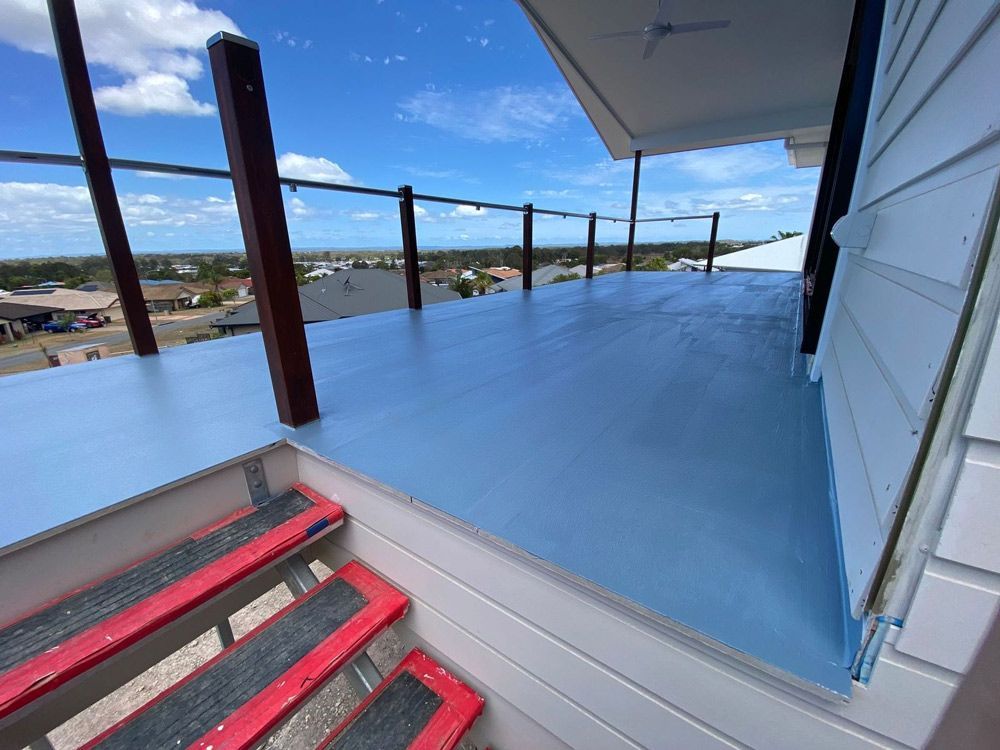
Balcony & External Waterproofing in New Construction
Balconies represent one of the more technically demanding waterproofing challenges in new builds. They're exposed to UV, thermal movement, direct rainfall and foot traffic, all of which place stress on a membrane system over time. When balcony waterproofing fails, the consequences can extend well beyond the balcony itself.
Water that breaches a balcony membrane can track into the structure below, affecting ceiling linings, timber framing and internal walls. What looks like an isolated surface issue can become a concealed structural problem.
Proper balcony waterproofing in new builds includes:
- Selection of a membrane system rated for external exposure & foot traffic
- Correct fall angles to ensure positive drainage toward outlets
- Detailed upturns at all wall junctions, a minimum of 150mm as a general guide
- Protection at door thresholds where internal & external substrates meet
- Accommodation for thermal expansion & movement in the membrane system
This is particularly important in coastal construction environments where UV intensity, humidity and salt air can accelerate membrane degradation if an unsuitable product is specified.
Common Waterproofing Defects Found at Handover
Pre-handover inspections regularly identify both visible and concealed waterproofing issues. Some defects are caught during final inspection; others only become apparent after the owner has moved in and the areas have been subjected to regular use.
The most frequently identified issues in new builds include:
- Insufficient membrane coverage on shower walls, often stopping short of the required height
- Missing or inadequately detailed internal corner treatment
- Gaps around waste outlets or pipe penetrations where the membrane hasn't been properly sealed
- No upturn or insufficient upturn height at wall-floor junctions
- Balcony membranes installed without adequate fall, leading to pooling & accelerated wear
- Evidence of moisture migration visible through grout lines or tile adhesion failures
Many of these defects aren't visible at a surface level during a standard inspection. They require someone with experience in waterproofing systems to identify them, and in some cases, they only become apparent through water testing.
Builder Responsibility vs Specialist Waterproofing
Builders carry responsibility for ensuring their projects meet code requirements, but the question of who applies the waterproofing and whether that work is independently checked varies considerably between projects.
In many residential builds, new build waterproofing is either subcontracted to a tiler or applied by a labourer as part of the broader build schedule. That approach is not inherently wrong, but it does place the responsibility for compliance entirely within the builder's scope, with no independent verification.
A specialist waterproofing contractor operates differently:
- They work exclusively in waterproofing systems & understand the full range of product & application requirements
- They can provide written documentation of the work completed, including product data sheets & application records
- They can conduct or facilitate water testing before tiling proceeds
- They're accountable for their work through licensing & warranty provisions
For homeowners, having a specialist involved, either appointed directly or as part of a quality-conscious builder's programme, provides a measurable layer of protection that generalised subcontracting does not.
Independent Waterproofing Inspections Before Handover
Even when waterproofing has been carried out by a competent trade, an independent inspection before handover confirms that the work meets the required standard. It's a step that many new build owners don't know to ask for, but one that's straightforward to arrange and worth the cost.
An independent waterproofing inspection typically covers:
- Visual assessment of membrane coverage, detailing & height compliance
- Identification of any areas where re-application or rectification is required
- Water testing of wet areas to confirm membrane integrity before tiles are laid
- Documentation of findings for the owner's records
If issues are identified before handover, the builder is responsible for rectification. Once the handover has occurred and the defect liability period has elapsed, that leverage is significantly reduced. An inspection before you sign off costs considerably less than rectification work after you've moved in.
What to Ask Your Builder Before Handover
Knowing the right questions to ask puts homeowners in a stronger position when it comes to assessing the quality of waterproofing in their new build. Builders who take this work seriously will have straightforward answers.
Before accepting handover, consider asking:
- Who applied the waterproofing and what are their qualifications?
- What membrane system was used and what are the product specifications?
- Can you provide documentation or a compliance certificate for the waterproofing work?
- Has any water testing been conducted?
- Are all wet areas, balconies and external surfaces included in the waterproofing scope?
If these questions meet hesitation or vague responses, that's a signal worth taking seriously. You have the right to understand what's behind the tiles before you accept the property.
We're Here to Help: Fraser Coast Waterproofing
We at Fraser Coast Waterproofing provide new build waterproofing in Hervey Bay and across the wider Fraser Coast region, working with homeowners, builders and owner-builders to ensure every stage is completed correctly before handover, not after problems appear.
Waterproofing in Hervey Bay comes with its own set of environmental considerations. High humidity, salt air and the intensity of UV exposure in this part of Queensland mean membrane selection and application need to account for local conditions. We understand the climate, the common construction methods used in this area and the issues that tend to arise in residential builds here. Whether you're looking for an independent inspection of waterproofing already completed, or you want a specialist to carry out the work as part of your build, we're available to help.
Visit us at our website to learn more about our services or get in touch directly to discuss your project. Getting waterproofing right before handover is one of the most straightforward ways to protect your investment, and we're here to make sure it's done properly.